
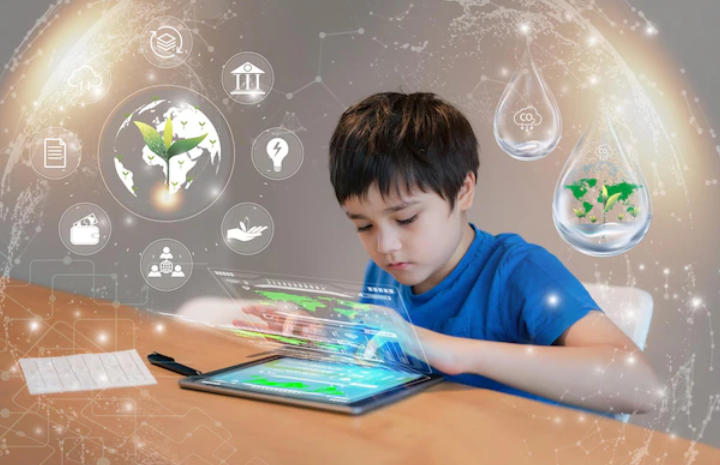
EdTech innovations are reshaping the educational landscape through advanced technologies. Personalized learning platforms adapt to individual student needs, creating tailored experiences. Gamification introduces engaging elements, enhancing motivation. Virtual reality offers immersive learning simulations, while artificial intelligence provides real-time feedback. These developments promise to address diverse learning styles and foster student autonomy. However, the implications of these innovations raise critical questions about accessibility and equity in education, warranting further examination.
The Rise of Personalized Learning Platforms
How has the emergence of personalized learning platforms transformed the educational landscape?
These innovative systems utilize adaptive assessments and learner analytics to tailor educational experiences to individual needs.
By providing real-time feedback and insights, they empower learners to take control of their education, fostering autonomy and engagement.
This shift not only enhances learning outcomes but also cultivates a more inclusive and responsive educational environment.
Gamification in Education: Engaging Students Through Play
As educators seek to enhance student engagement, gamification has emerged as a powerful tool for transforming traditional learning experiences.
By integrating game-based assessments and interactive storytelling, educators foster a dynamic environment that promotes active participation.
This innovative approach not only motivates students but also enhances learning retention, enabling them to explore complex concepts in a playful, enjoyable manner, ultimately fostering greater academic freedom.
The Impact of Virtual Reality on Learning Experiences
While traditional educational methods often struggle to captivate the attention of a digitally native generation, virtual reality (VR) has emerged as a transformative force in learning experiences.
By offering immersive simulations, VR fosters enhanced engagement, allowing learners to interact with complex concepts in a tangible way.
This innovative approach not only enriches understanding but also empowers students to explore and create within virtual environments.
See also: What Is B2k-Zop3.2.03.5 Model: Model Specification & Technical Review
Artificial Intelligence: Tailoring Education to Individual Needs
Building on the advancements brought forth by virtual reality, artificial intelligence (AI) is further revolutionizing the educational landscape by personalizing learning experiences.
Through adaptive assessments, AI identifies individual learning gaps, enabling tailored content delivery.
Intelligent tutoring systems provide real-time feedback, fostering autonomy and engagement.
This innovative approach empowers learners to pursue knowledge at their own pace, ultimately enhancing educational outcomes and individual growth.
Conclusion
As the educational landscape evolves, EdTech innovations emerge as the compass guiding learners through uncharted territories of knowledge. By harnessing personalized learning platforms, gamification, virtual reality, and artificial intelligence, education becomes a dynamic and inclusive journey rather than a stagnant destination. These tools not only cater to diverse learning styles but also ignite curiosity and engagement, ensuring that the future of learning is not just about acquiring knowledge, but about fostering a lifelong love for discovery.


